Write for Human Download Time The Real Problem Isn't AI. It's slop.
by
Kadhir Mani
(3.9 minutes)
<section data-section-id='85e3ecfc-a291-4277-84d6-60691e7c48de'><p><audio url="https://api.productnow-prod.com/storage/getStorageObject?storageObjectId=36f9d4f6-9594-40ab-a595-370403aca4b9"></audio></p></section>
<section data-section-id='426b9d25-7184-4a1c-91e2-84d1268c7199'><h1 id="the-real-problem-isn-t-ai-it-s-slop">The real problem isn't AI. It's slop.</h1><p><b><strong class="LexicalTextEditor-module-scss-module__vIcBXa__textBold" style="white-space: pre-wrap;">What feels good is instant understanding.</strong></b><span style="white-space: pre-wrap;"> What feels bad is wading through padded, roundabout prose and waiting for the point to arrive.</span></p><p><br></p><p><b><strong class="LexicalTextEditor-module-scss-module__vIcBXa__textBold" style="white-space: pre-wrap;">The real divide is slop versus clarity </strong></b><span style="white-space: pre-wrap;">— not AI versus human authorship. Working memory is limited, and added context can lower comprehension.</span></p><p><br></p><p><span style="white-space: pre-wrap;">We spend a lot of time thinking about docs. Docs are fundamentally different from code. Code has to compile, it doesn't always have to be read.</span></p><p><br></p><p><span style="white-space: pre-wrap;">A document, on the other hand, has to be understood by a human, with limited attention. And that attention is being taxed heavily now. That is a much harder bar in our experience.</span></p><p><br></p></section>
<section data-section-id='e79d0eea-5c1d-4eff-bac8-59523e3b0f38'><h2 id="why-roundabout-writing-is-so-costly">Why roundabout writing is so costly</h2><p><span style="white-space: pre-wrap;">Roundabout writing costs attention twice: first to decode the sentence, then to hunt for the point. That is expensive because working memory is tiny; every extra clause competes for the few items a reader can hold in working memory at once.</span></p><p><br></p><p><b><strong class="LexicalTextEditor-module-scss-module__vIcBXa__textBold" style="white-space: pre-wrap;">Why this matters:</strong></b><span style="white-space: pre-wrap;"> AI output is often judged as “slop” when it increases friction before meaning. This is why chatty responses feel harder than they should. Every extra phrase adds a small tax, and those taxes add up fast. </span></p><p><br></p><p><callout icon="alert-triangle" color="#F59E0B">This isn't unique to AI. Human writing has always had this problem — corporate memos, academic papers, legal documents, internal wikis. AI just produces the same failure mode faster and at greater volume.</callout></p><p><span style="white-space: pre-wrap;">We think the fix is substance with fewer steps between the reader and understanding.</span></p><p><br></p></section>
<section data-section-id='52da75cf-b47f-4e8c-8e7b-e61e7682f090'><h2 id="communication-has-more-bandwidth-than-prose">Communication has more bandwidth than prose</h2><p><span style="white-space: pre-wrap;">Beyond just using AI for clearer writing, we think there's serious opportunity to reimagine written communication here. Docs and word processors were built for an era when everything had to be printed. That constraint is gone — and with it, the assumption that prose and images are the highest-bandwidth channel available.</span></p><p><br></p><p><b><strong class="LexicalTextEditor-module-scss-module__vIcBXa__textBold" style="white-space: pre-wrap;">Different tasks need different representations.</strong></b><span style="white-space: pre-wrap;"> Text, diagrams, motion, and interaction do different cognitive jobs — and the right choice depends on the task, not on fixed "learning styles." A chart compresses comparison. A diagram externalizes spatial relationships that would take paragraphs to describe. Motion communicates sequence and causality in ways static images cannot.</span></p><p><br></p><p><callout icon="info" color="#3E63DD">The goal is task fit: match the format to what the reader needs to understand, and meaning arrives faster.</callout></p><p><br></p><p><b><strong class="LexicalTextEditor-module-scss-module__vIcBXa__textBold" style="white-space: pre-wrap;">Prototypes are a super high-bandwidth format for communicating behavior.</strong></b><span style="white-space: pre-wrap;"> When a concept involves layered state, non-obvious interactions, or emergent edge cases, prose hits a ceiling fast. A static spec asks the reader to simulate the system in their head. A prototype just runs it. That is not a small difference — it is the difference between telling someone how a door feels and handing them the handle.</span></p><p><br></p><p><callout icon="rocket" color="#EF4444">We think prototypes are just the beginning. There's a whole new world of rich communication that's unlocking.</callout></p><p><br></p></section>
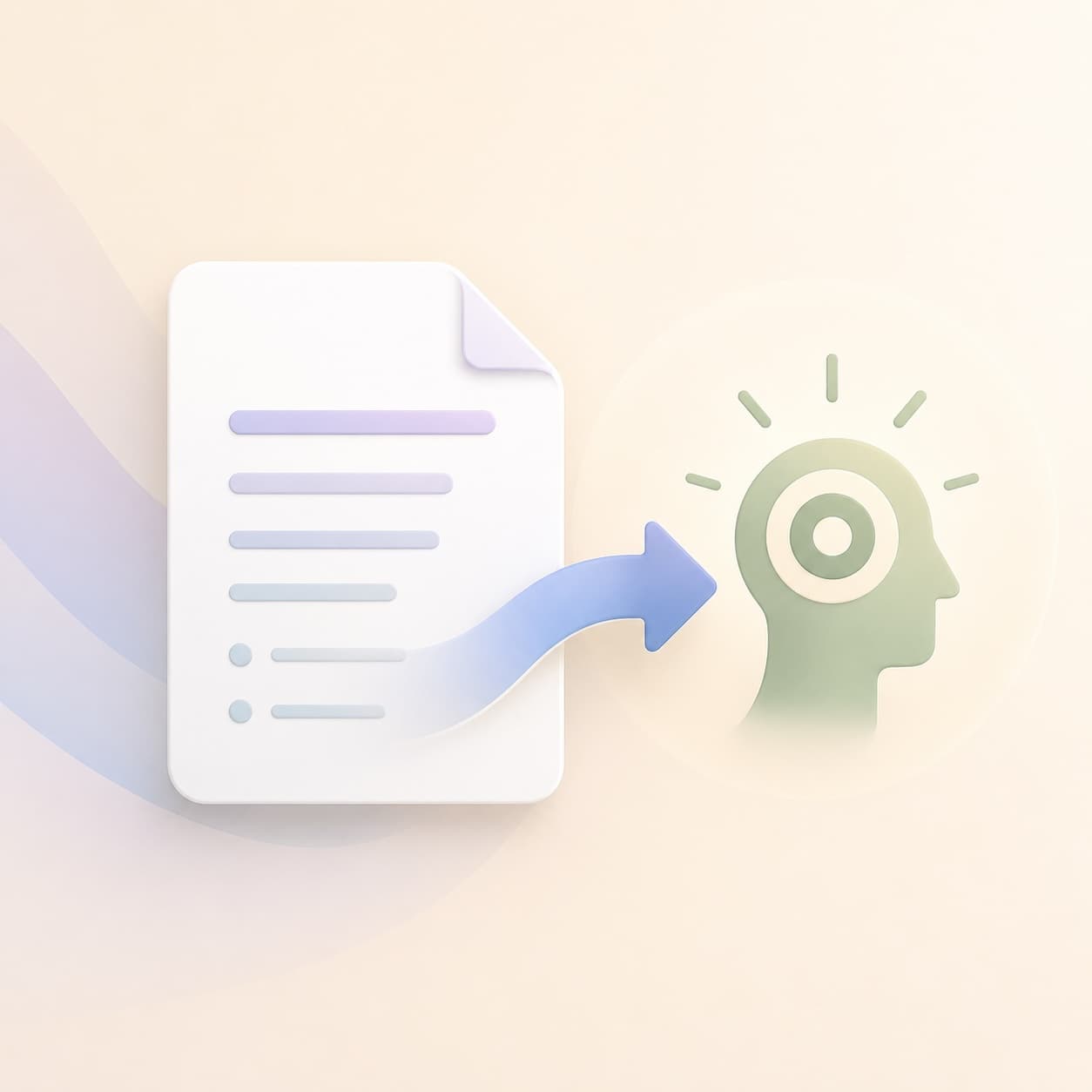
<section data-section-id='6ce65f7a-8a5b-45fd-8720-e31573c14988'><h2 id="write-for-human-download-time">Write for human download time</h2><p><span style="white-space: pre-wrap;">At ProductNow, we've started tracking a new metric we call </span><b><strong class="LexicalTextEditor-module-scss-module__vIcBXa__textBold" style="white-space: pre-wrap;">human download time</strong></b><span style="white-space: pre-wrap;"> — and we think it's the metric that matters most in an age of AI-generated content.</span></p><p><br></p><p><callout icon="target" color="#8B5CF6"><strong>Human download time</strong> is the gap between encountering information and actually understanding it. It starts the moment a reader's eyes hit the page and ends when the meaning has fully landed. The shorter that gap, the better the communication.</callout></p><p><span style="white-space: pre-wrap;">Because AI can now generate unlimited prose in seconds, the bottleneck is no longer production — it is comprehension. Content is cheap. Understanding is not.</span></p><p><br></p><p><span style="white-space: pre-wrap;">We believe optimizing for human download time is the right frame for thinking about communication quality going forward. Slop versus clarity is not about AI versus human authorship — it is about whether meaning arrives fast or slow.</span></p><p><br></p></section>
<section data-section-id='629f219a-74a1-46af-b649-85c19a4ccc09'><h2 id="my-personal-experience">My personal experience</h2><p><span style="white-space: pre-wrap;">I'll be honest. I think writing concisely is an act of respect for the reader's time. I believe that deeply, but I also don't always have the time — and I've never had the natural talent for it.</span></p><p><br></p><p><span style="white-space: pre-wrap;">I usually know what I want to say; I've just always struggled with the how. That's exactly where AI has changed things for me. It lets me stay focused on the substance — the idea, the arguments, the things that actually matter to me — and offload the craft of expressing it cleanly.</span></p><p><br></p><p><span style="white-space: pre-wrap;">And I think this is bigger than just writing. We've watched AI turn non-builders into builders — people who had ideas but couldn't code, suddenly shipping software. I believe the same shift is happening with communication.</span></p><p><br></p><p><span style="white-space: pre-wrap;">The ability to express an idea clearly, to structure an argument, to find the right words — that used to require a specific kind of talent and years of practice. AI is democratizing that. Non-writers are becoming good enough writers. Not because the machine is doing the thinking, but because it's handling the part that always got in the way: the translation from thought to clear expression.</span></p><p><br></p><p><span style="white-space: pre-wrap;">In my experience, when that partnership works, </span><b><strong class="LexicalTextEditor-module-scss-module__vIcBXa__textBold" style="white-space: pre-wrap;">human download time collapses</strong></b><span style="white-space: pre-wrap;">.</span></p><p><br></p></section>